
Grey Belt: An Opportunity to Create Better Places
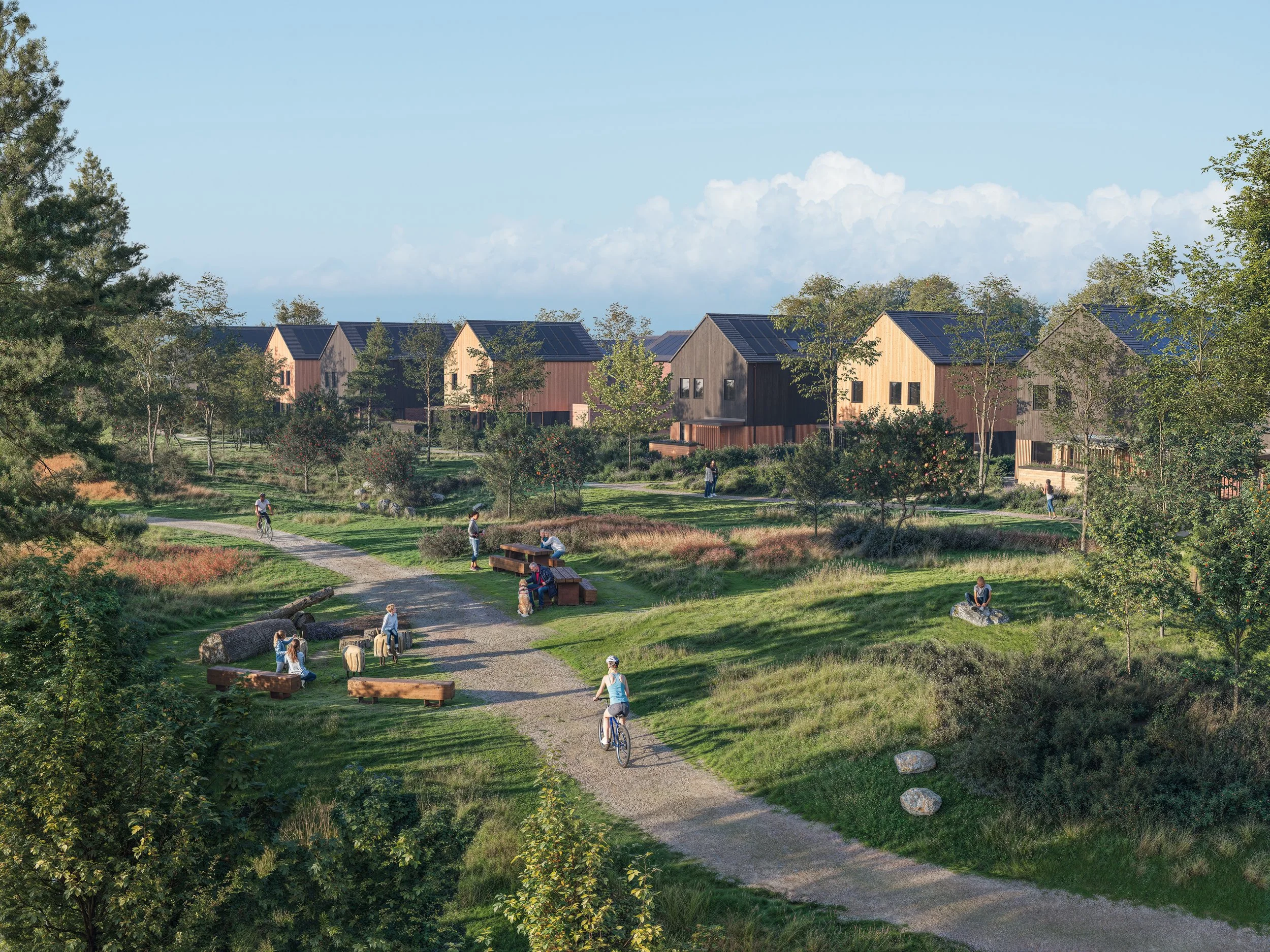
The introduction of the Grey Belt has become one of the most significant developments in the planning and housing debate in recent years.
Much of the discussion has focused on policy definitions and land classifications. Yet from a design perspective, the more interesting question is not what Grey Belt is, but what it has the potential to become.
For those of us involved in shaping new communities, Grey Belt presents an opportunity to rethink how growth happens. It offers the chance to deliver much-needed homes while creating places that are greener, more connected, more sustainable and more responsive to local needs.
At its best, development should leave a place stronger than it was before. That means better landscapes, improved biodiversity, high-quality homes, enhanced public spaces and stronger community infrastructure.
The real opportunity presented by Grey Belt is the opportunity to create places that people are genuinely proud to be part of.
So What is Grey Belt?
In policy terms, Grey Belt refers to land within the Green Belt that is already compromised. This may include previously developed land, redundant buildings, hardstanding or land that contributes relatively little to the original purposes of Green Belt designation.
The intention is not to weaken environmental protections. Rather, it is to create a more nuanced approach that allows appropriate sites to contribute towards housing need while delivering meaningful public benefits.
The key question therefore becomes: “How can development on these sites create the greatest possible value for communities?”
Starting with Place
Speaking to communities throughout the planning process, we hear the understandable resistance to change. Happy with what they’ve got, they are often unwilling to believe that we mean well, that our proposals are genuinely thought out, that we want to improve their place and provide housing for future generations of their families. We want more opportunities for their children to afford a new house and to be able to stay in the local area. Architects only ever want to improve a place, and while the reality is not always the same as the dream, we are genuinely trying to make a place better.
For us, successful development begins by understanding what already makes a place special. When design is informed by local history, landscape, settlement patterns, views, ecology and architectural character, development becomes rooted in its surroundings rather than imposed upon them.
This is why landscape-intense thinking is so important.
We find the most successful schemes use landscape and green infrastructure to shape development from the start. Across recent work in areas including Epping, Basildon and Hertsmere, existing topography, vegetation, field patterns and ecological assets have helped establish the framework for development. Homes, streets, open spaces and movement networks are then organised around these features.
The result is often a more distinctive, resilient and locally grounded place.
Creating Communities
One of the greatest opportunities presented by Grey Belt is the ability to address local housing needs while creating balanced and inclusive communities.
In many of the areas where we work, younger generations, key workers and older residents seeking to downsize are increasingly finding it difficult to remain within the communities they know. Well-designed affordable housing plays a vital role in addressing this challenge.
Affordable housing should form an integrated part of the neighbourhood, indistinguishable from market housing and distributed throughout the development using tenure-blind design principles. Done well, this creates healthier social mix, stronger communities and places that better reflect the needs of local people.
Designing Places That Work
Creating successful neighbourhoods requires more than simply determining how many homes can fit on a site. The most successful developments combine:
✅ Landscape-led design
✅ Appropriate density
✅ Walkable neighbourhoods
✅ Sustainable movement networks
✅ Strong public realm
✅ Long-term environmental resilience
Density, for example, should be carefully distributed according to context. Higher densities may be appropriate near key connections and local centres, while lower densities can help create sensitive transitions to surrounding countryside.
Similarly, movement should prioritise walking, cycling and public transport wherever possible, creating neighbourhoods that are healthier, more connected and less dependent on the private car. These principles help create places that feel coherent, legible and enjoyable to live in.
Sustainability as a Foundation
Sustainability should form part of the foundation of how places are designed. This includes:
➡️ Energy-efficient homes
➡️ Biodiversity enhancement
➡️ Sustainable drainage systems
➡️ Climate resilience
➡️ Long-life materials
➡️ Green infrastructure networks
When integrated from the outset, these measures improve environmental performance while also enhancing the quality of everyday life for residents.
The Opportunity Ahead
Grey Belt provides an opportunity to demonstrate that growth and quality can go hand in hand. Across projects currently progressing through local authorities including Hertsmere Borough Council and Epping Forest District Council, landscape-led masterplanning, high-quality affordable housing, sustainable infrastructure and contextual design principles are helping to shape places that respond positively to their surroundings.
The most successful developments are rarely defined by the number of homes they deliver alone; they are remembered for the quality of the places they create.
Judged by Outcomes
Ultimately, Grey Belt will be judged by outcomes. If it enables the creation of greener neighbourhoods, stronger communities, better housing choices and more sustainable places, it can become a positive force in addressing some of the UK's most pressing housing challenges.
For designers, planners, developers and local authorities alike, that should be the ambition. Not simply to build more homes, but to create better places.